
A slow drip behind a kitchen wall can cost more than a new roof. I’ve walked into houses across Texas where a supply line let go on a Tuesday, nobody noticed until Friday, and by then the baseboards were soft in three rooms. Water damage works quietly, which is exactly what makes it expensive. If you’re sitting on a house in Texas with stained ceilings, a swollen subfloor, or a flood history you’d rather not think about, you have more paths forward than you probably believe.
Does Texas Law Require You to Disclose Water Damage When Selling?
Hiding a leak is the single worst financial decision a seller can make in Texas.
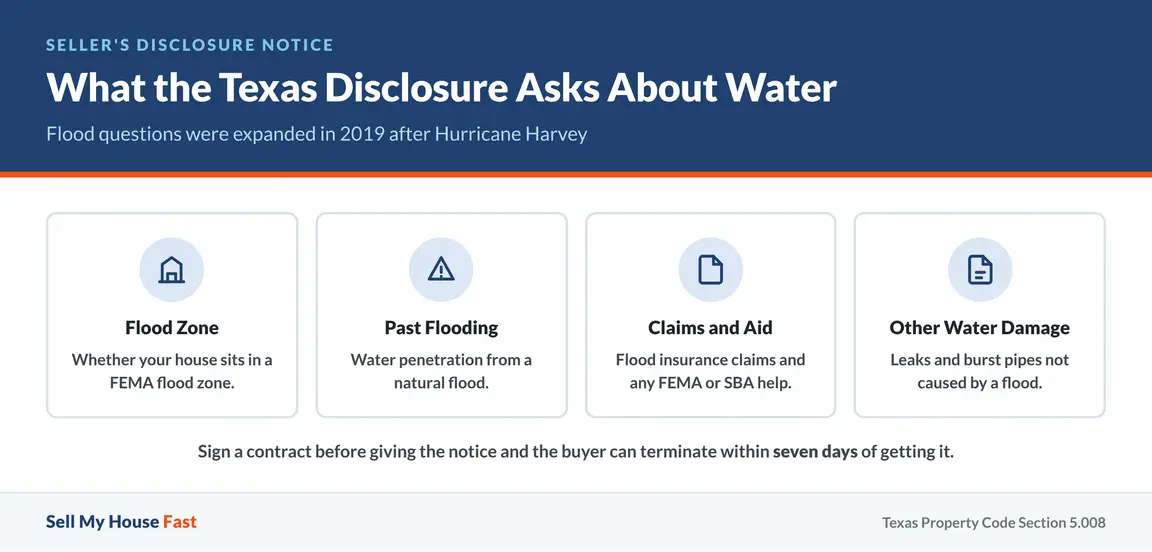
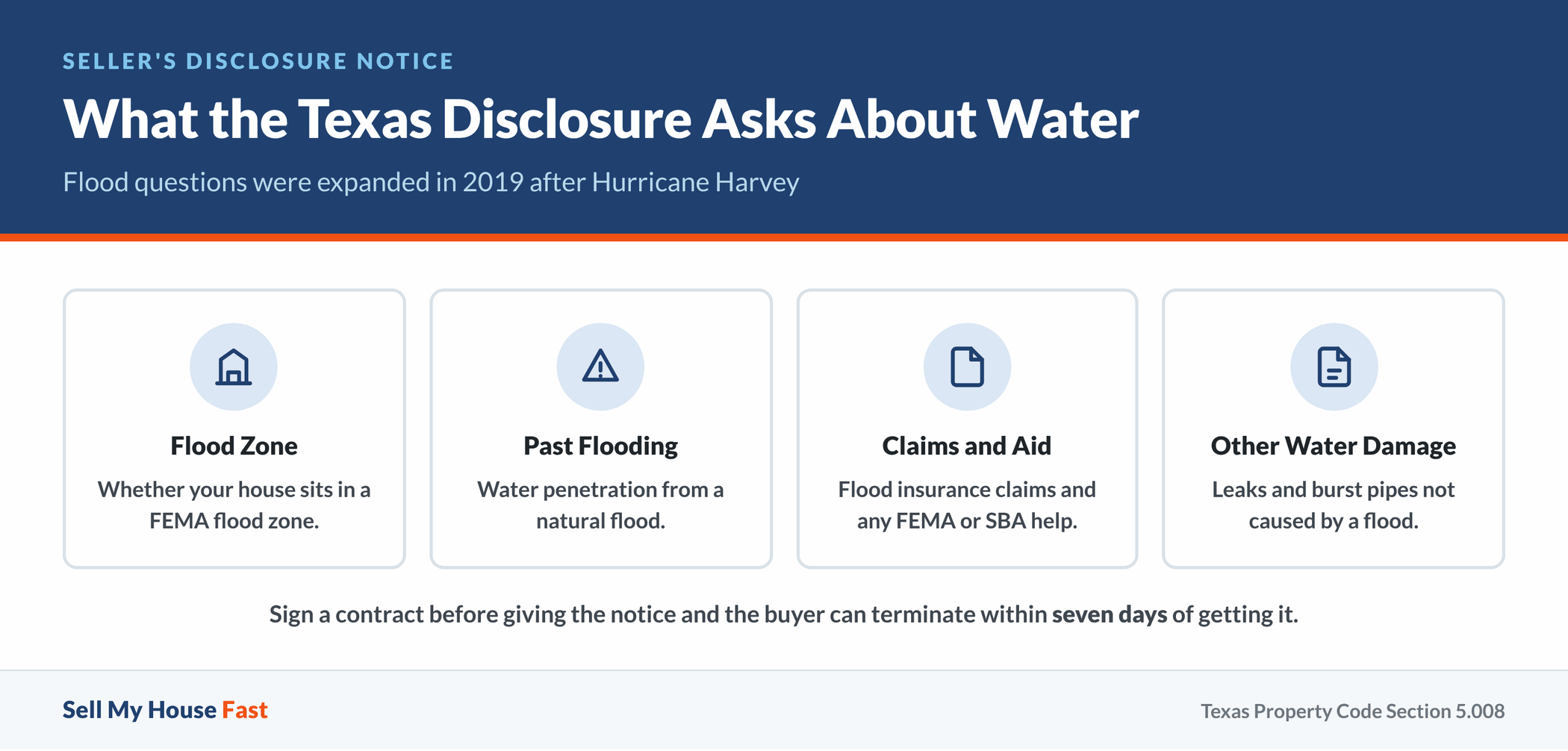
Sellers of single-family residential property here owe the buyer a written Seller’s Disclosure Notice, and the requirement comes from Section 5.008 of the Texas Property Code. After Hurricane Harvey, lawmakers expanded the flood questions in 2019. The form now asks about your FEMA flood zone, past water penetration from a natural flood, flood insurance claims you’ve filed, and any FEMA or SBA assistance you received. The notice also asks separately about water damage not caused by a flood event, which is where most burst pipes and roof leaks land.
In Texas, sellers trip over one detail constantly: the form is answered to the best of your knowledge, so “unknown” is a legitimate answer when you genuinely don’t know, even though guessing is not. If you sign a contract before delivering the notice, the buyer can terminate for any reason within seven days of receiving it.
Selling as-is doesn’t erase this duty. An as-is clause doesn’t wipe out your disclosure obligations or your exposure for fraud and active concealment. I’ve watched deals in Texas die at the inspection stage because a seller painted over a stain instead of writing one honest sentence about it on the form.
Some sellers are exempt. An executor or administrator selling a house during the administration of a decedent’s estate falls outside the notice requirement under the statute’s fiduciary exemption. Buyers who feel informed stay at the table; buyers who feel ambushed walk and sometimes call a lawyer.
How Does Flood Zone Status Affect a Water Damaged House in Texas?
And disclosure is only half the conversation, because the zone your house sits in shapes what a buyer can borrow and what they’ll pay to insure. Homes in high-risk flood zones carrying mortgages from federally regulated or insured lenders are required to have flood coverage, and that requirement follows the property, not the owner. So a buyer running the numbers on your Texas house is adding an insurance premium to their monthly payment before they ever make an offer.
Zone designations inside a single Texas ZIP code vary wildly.
Last year I bought a duplex in Dickinson from a landlord who’d been chasing rent for eleven years on a property he inherited and never wanted. The downstairs unit had taken water twice, and the garage still had a shelf of hurricane supplies nobody had touched since the second storm. He told me on a Saturday morning that he was finished being a landlord. We closed without him ever repairing it.
Does a flood zone tank your sale price in Texas? Not automatically. It narrows your buyer pool and lengthens your timeline, and that matters more in a market like this one. The statewide median home price was $350,000 in July 2026, up 2.94% year over year, with properties averaging 63 days on market and 2.89 months of supply. Add a flood history to that, and you’re often looking at a longer road than the averages suggest.
What Does an Elevation Certificate Reveal About Water Damage Risk?
Nine inches. I’ve seen roughly that difference flip a house from “lender wants flood coverage” to “lender doesn’t,” and an elevation certificate is the document that proves which side you’re on.
FEMA changed the rules on these a few years back. Under Risk Rating 2.0, an elevation certificate is no longer required to buy a policy; FEMA uses its own elevation data for the building instead.
So why would a Texas seller pay for one? Because it’s negotiating ammunition. A buyer looking at a house with visible signs of it will assume the worst about flood exposure unless you hand them evidence otherwise. A certificate showing the finished floor above base flood elevation reframes the whole conversation.
Pricing on certificates varies by surveyor and by county across Texas, so call two or three local surveyors for current quotes rather than trusting an online figure.
One caution. An elevation certificate says nothing about damage from inside the house, because roof leaks, slab plumbing, and failed water heaters never show up on a survey. All of it still goes on your Texas disclosure form.
How Does the National Flood Insurance Program Help Texas Homeowners?
A widow in Port Arthur called me about her late husband’s rental, convinced she’d be paying out of pocket for everything because her homeowners policy had denied the claim.
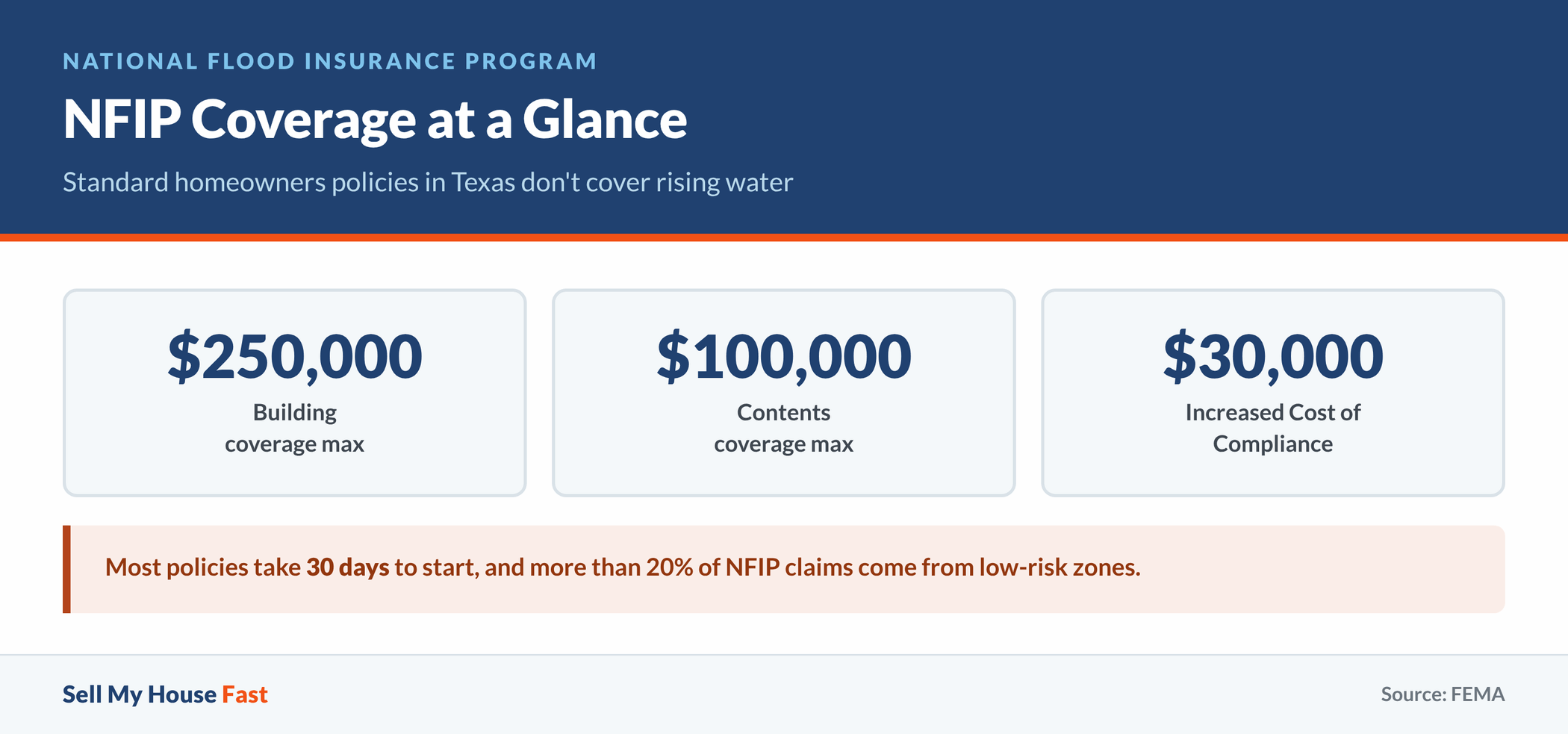
Standard homeowners insurance in Texas doesn’t cover rising water. That’s the gap the National Flood Insurance Program exists to fill, and it’s the reason so many Texas homeowners carry two policies. NFIP building coverage tops out at $250,000 with $100,000 for contents, and the program also includes Increased Cost of Compliance coverage up to $30,000 for elevation, demolition, or relocation required by local ordinance.
Most NFIP policies don’t take effect until 30 days after purchase, which means coverage bought once a storm is in the forecast starts too late to matter. Buying flood insurance in connection with a mortgage loan closing is one of the exceptions with no waiting period.
Do you still need flood coverage outside a high-risk zone in Texas? FEMA’s own numbers say yes. More than 20 percent of NFIP claims come from low-risk zones, and those areas take roughly a third of federal disaster assistance for flooding.
Buyers in Texas price uncertainty harshly, and a documented claim history with a paid settlement tells them exactly what happened and what got fixed.
What Does Water Damage Repair Cost in Texas?
A homeowner sees a wet patch of drywall and pictures a weekend job with a fan and a utility knife.
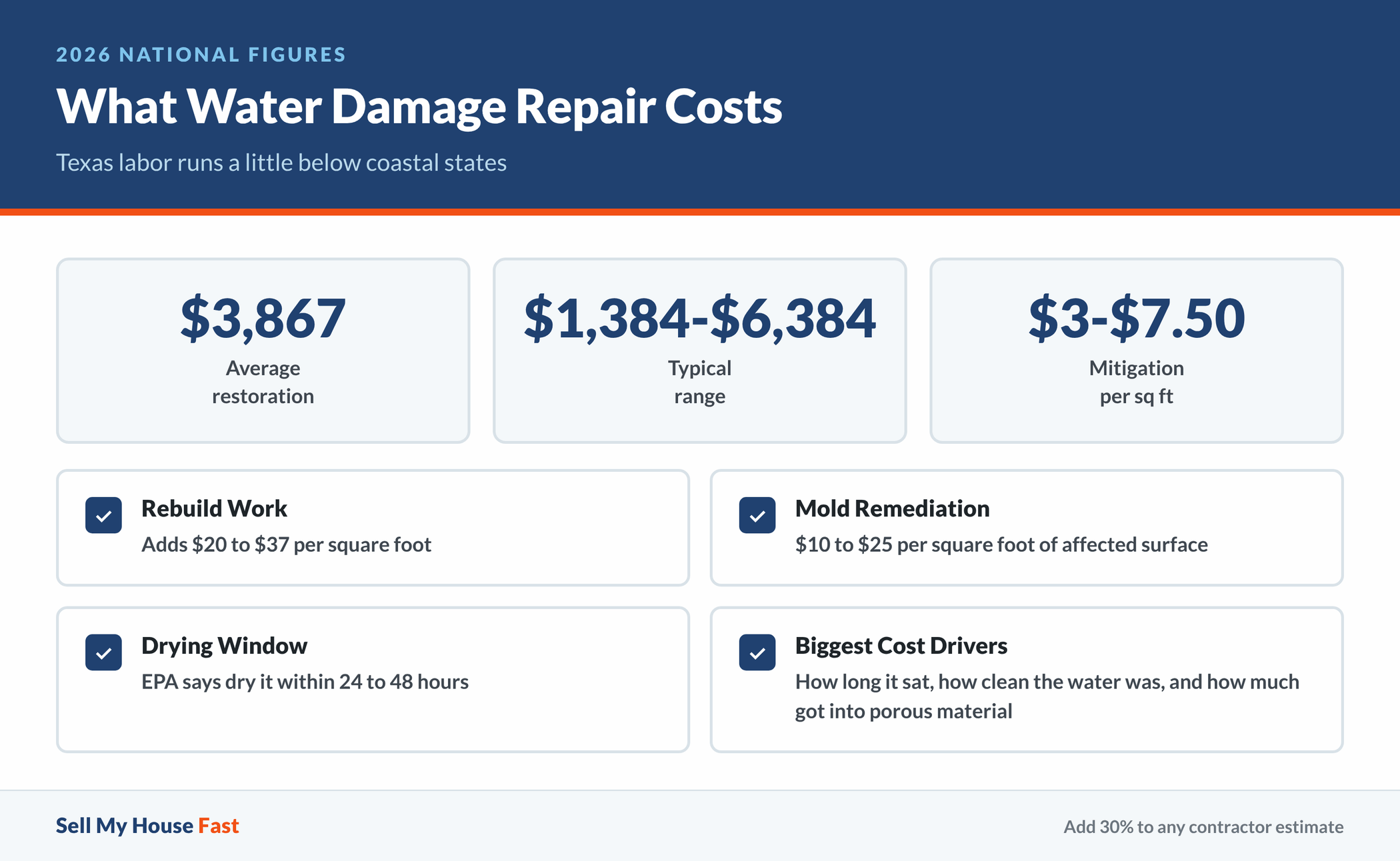
Nationally in 2026, restoration from this runs $1,384 to $6,384 with an average around $3,867, with mitigation at $3 to $7.50 per square foot and rebuild work adding $20 to $37 per square foot. Texas labor sits a little below coastal-state pricing, but materials don’t care what state you’re in.
Professional mold remediation in 2026 runs $10 to $25 per square foot of contaminated surface for most residential jobs. Our humidity in East Texas and along the Gulf makes mold growth faster here than almost anywhere. The EPA’s guidance is that water-damaged areas need to be dried within 24 to 48 hours to prevent it.
Your bill comes down to three things more than anything else: how long the water sat, whether it was clean or contaminated water, and how much of it got into porous material. A sewage backup is a different animal entirely, and so is anything involving a slab leak under finished flooring.
Budget wisely. I tell every seller the same thing: take the contractor’s estimate and add thirty percent, because demolition always reveals more of it than the walk-through did. That’s not pessimism. Twenty years of invoices, that’s what it is.
Should You Repair Water Damage or Sell the House As-is?
For years I pushed sellers to fix everything first, and I was wrong about that more often than I’d like to admit.
The math rarely works the way people hope. You spend money on water damage repairs, then discover retail buyers in Texas still discount the house for its history, because the disclosure form follows the property forever.
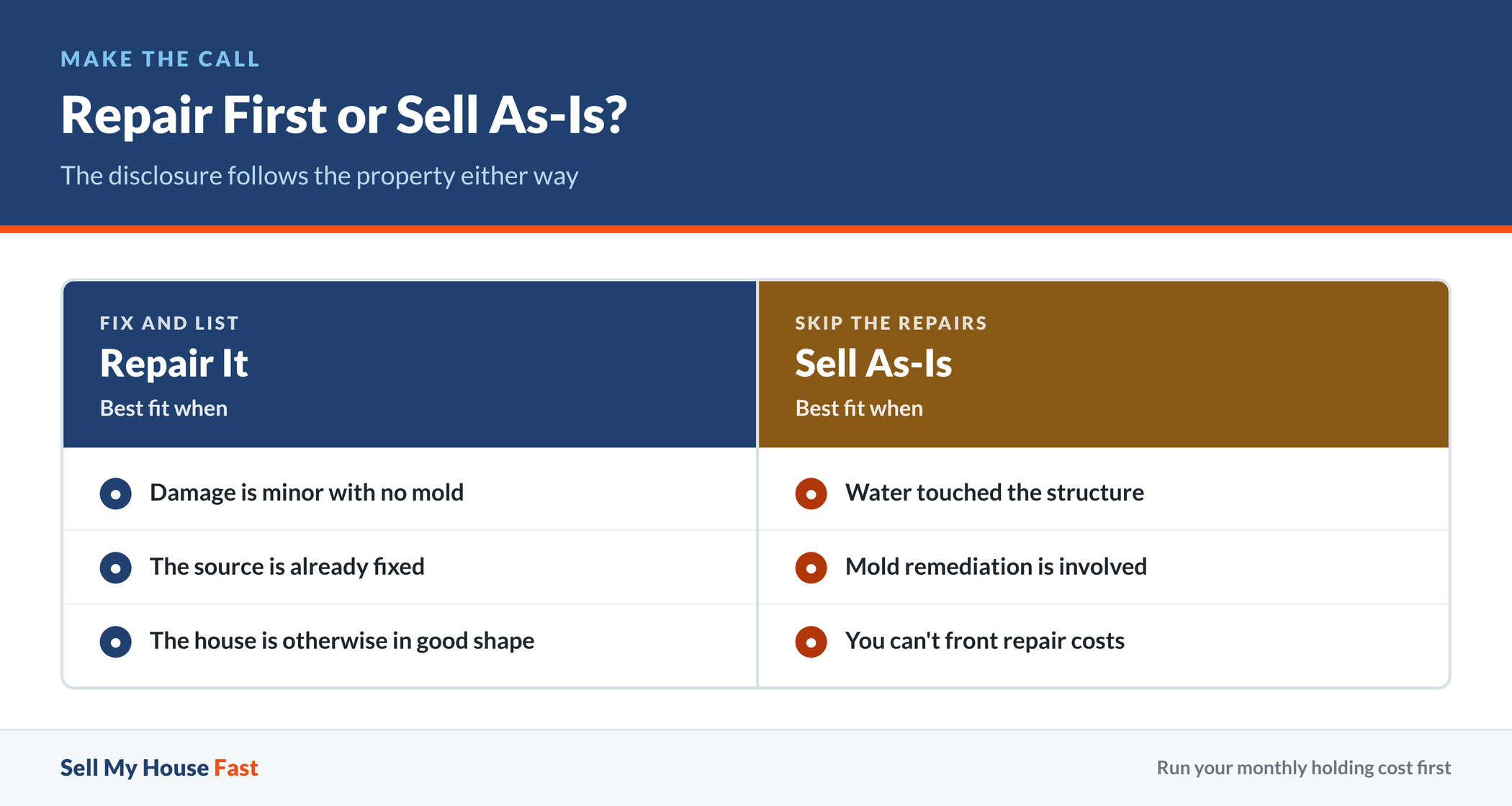
Minor water damage with no mold, a clear source that’s already fixed, and a house that’s otherwise in good shape for its neighborhood? Fix it and list it.
Selling as-is makes sense when the water damage touches structure, when mold remediation is involved, or when you don’t have the cash to front repairs and wait on reimbursement. Austin’s average days on market hit 74 days as of early October 2026, with 57.69% of active listings having cut their price at least once. Add repair time to that and you’re carrying the property for months.
What’s your actual holding cost per month? Mortgage, taxes, insurance, utilities, lawn service. Multiply that by four or five months of retail listing time in this Texas market. That number usually tells sellers everything they need to know about whether a cash offer is really a discount.
Investors like us at Sell My House Fast buy water damage properties because we’ve got crews, not because we’re gambling.
How Do You Sell a House with Water Damage in Texas?
“Who’s even going to want this?”
Three realistic paths exist for a Texas seller with water damage, and each one suits a different situation.
Listing with a real estate agent works if the water damage is cosmetic and documented. Price it to reflect condition, hand every buyer the disclosure and your repair receipts up front, and expect conventional financing to be touchy. Dallas sellers got a median $461,000 over the three months ending October 2026, up 7.8% year over year. But I’ve seen deals collapse at the appraisal stage because a house with active moisture issues won’t appraise anywhere near a comparable dry one.
No financing contingency, no appraisal, no repair demands at closing, no second inspection. We buy in cash and we close on the seller’s calendar, sometimes in a week.
Auction is the third road, and it’s the one I’d avoid unless you’ve exhausted the others.
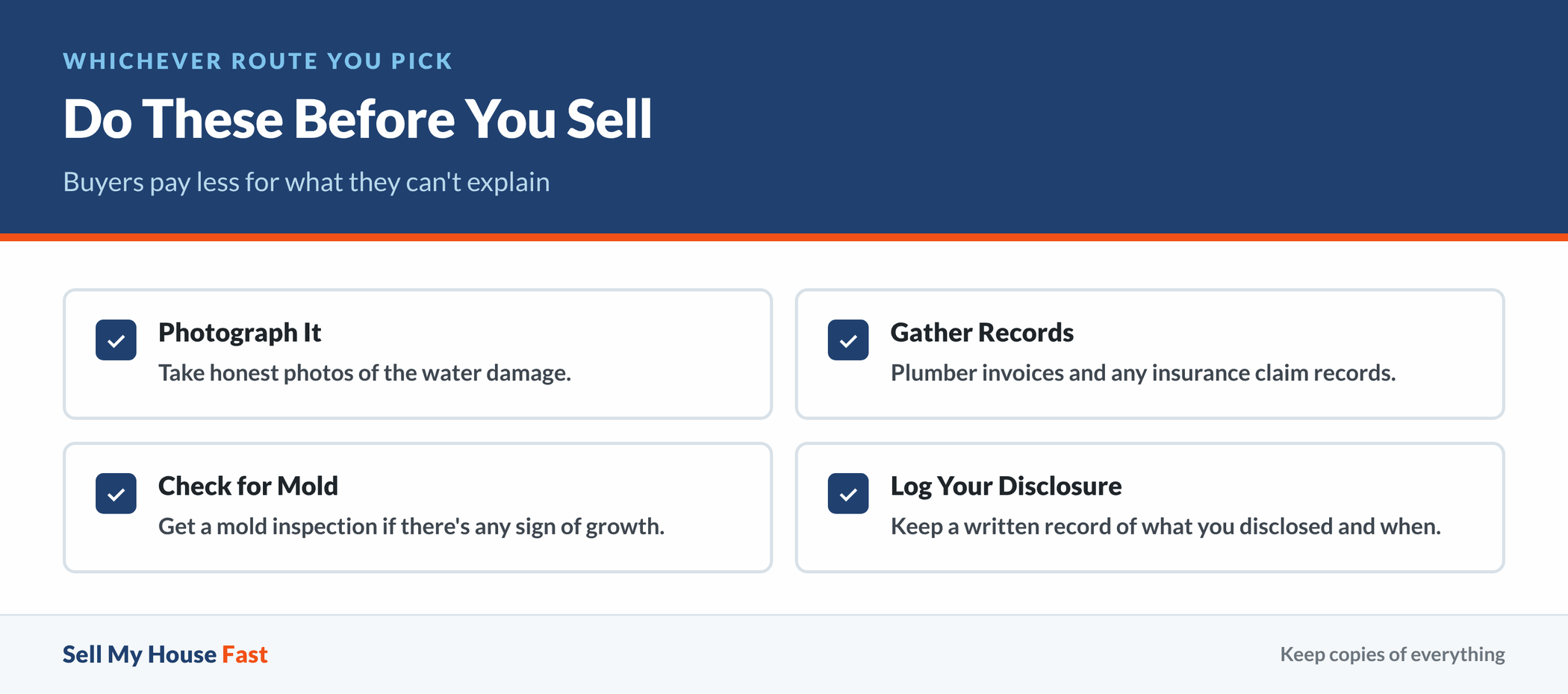
Whichever route you pick in Texas, do these things: photograph the water damage honestly, gather your plumber invoices and any insurance claim records, get a mold inspection if there’s any suspicion of growth, and keep a written record of what you disclosed and when, because buyers pay less for what they can’t explain.
Houston’s median sale price was $330,000 over the three months ending October 2026, down 5.5% year over year, with homes averaging 54 days on market compared to 49 a year earlier. Softening markets punish houses with condition problems first. If you’re going to sell a water-damaged house in Texas, moving sooner beats waiting for a stronger market that may not arrive.
What Steps Reduce Future Water Damage Risk for Texas Homeowners?
Why would I spend money on prevention when I’m selling anyway?” The cheap fixes are the ones buyers and inspectors look for. Skipping them costs you more at the negotiating table than doing them.
Start outside. Gutters that dump against the foundation, grading that slopes toward the house, and flower beds built up above the slab cause more water damage in Texas subdivisions than storms do.
Inside, the water heater is the usual suspect. Most failures I see in Texas garages come from tanks past twelve years old, sitting on a slab with no drain pan. A slow leak just spreads across the floor instead of draining away. A pan with a drain line runs a couple hundred dollars installed.
A leak detection device on the main line will cut power to the water supply when it senses continuous flow, and insurance agents in Texas increasingly offer a discount for one.
Older homes in places like Highland Park, the Heights, and Monte Vista carry cast iron drain lines that crack with age. A plumber’s camera inspection of the sewer line costs a few hundred dollars and tells you whether you’re sitting on a slow-motion water damage problem.
A woman in Waxahachie reached out about her father’s house after he passed. The kitchen had taken water from a failed dishwasher line that ran for days before anyone found it. The contractor’s estimate to redo the cabinets, subfloor, and lower drywall came in higher than that kitchen would have added to the home’s value in that neighborhood. We bought it as-is on a Thursday, she kept her father’s tools out of the garage, and she was done.
Frequently Asked Questions About Selling a House with Water Damage in Texas
Do Real Estate Agents Have to Disclose Water Damage in Texas?
Agents in Texas have their own duty to disclose material facts they know about a property, separate from the seller’s statutory notice. If your Realtor sees a stained ceiling or learns about a past flood claim, they can’t stay silent about it to help a deal close. That duty runs to buyers as well, and real estate brokers in Texas have lost licenses over concealed water damage. Treat your agent as someone who needs the full story, not a filter for it.
Will a Buyer’s Home Inspection Find Water Damage I’ve Already Repaired?
Usually, yes. Home inspectors carry moisture meters and thermal cameras, and repaired water damage leaves evidence behind in the form of mismatched drywall texture, replaced subfloor sections, and fresh paint on one wall. Since you’re required to put repaired water damage on the disclosure form anyway, there’s no upside in hoping the inspection misses it.
Can I Sell a House in Texas That Still Has Active Mold?
You can. Mold doesn’t make a property unsellable in Texas; it makes it uninsurable and unfinanceable for most conventional buyers, which pushes you toward cash investors. Get a mold inspection first so you know the scope rather than negotiating against an unknown. A written remediation estimate in hand usually protects your price better than letting a buyer imagine the worst.
Does Homeowners Insurance in Texas Cover All Water Damage?
No, and the distinction trips up a lot of homeowners. Sudden, accidental water damage from a burst pipe or an overflowing appliance is typically covered by a standard home insurance policy, but rising water from outside the house generally isn’t. That second category is what the separate federal flood program handles, and gradual leaks that went unaddressed are commonly excluded by the insurance company altogether.
How Fast Can I Sell a Water-damaged House for Cash in Texas?
Cash closings on water damage properties in Texas often happen in seven to fourteen days, since there’s no lender ordering an appraisal and no financing contingency to clear. The real timeline driver is title work: a clean title moves fast, while probate, liens, or an unreleased mortgage from decades ago will add weeks. Ask any buyer for their title company’s name and call it yourself.
Is Selling As-is the Same as Selling Without Disclosure in Texas?
Not at all, and conflating the two creates real liability. As-is means you won’t make repairs or offer credits for condition; disclosure means you tell the truth about what you know. Texas law requires the second regardless of how you structure the first, and an as-is clause offers no protection against a claim that you concealed known water damage.
If you’ve got a house in Texas with water damage and you’re not sure whether repairing, listing, or selling as-is makes the most sense for your situation, I’m happy to talk it through. Sometimes the right answer is to fix the leak and call a Realtor, and I’ll tell you that if it’s true. If a straightforward cash sale fits better, that’s what we do at Sell My House Fast. No pressure, no obligation, and no hard feelings if you decide to go another direction.
Selling a Water-Damaged House in Dallas-Fort Worth
Water damage hits harder when houses are slow to sell. In October 2026, Realtor.com reported that 27.5% of Dallas-Fort Worth listings had taken a price cut. A house with a stained ceiling or a flood history tends to feel that pressure first. If carrying it for months doesn’t work for you, a direct cash sale skips the showings and the repair requests.
Get a Cash Offer for Your Water-Damaged House
Want to see what your house is worth as-is? Reach out to Sell My House Fast or fill out the form below, and we’ll talk through your options with no obligation.